
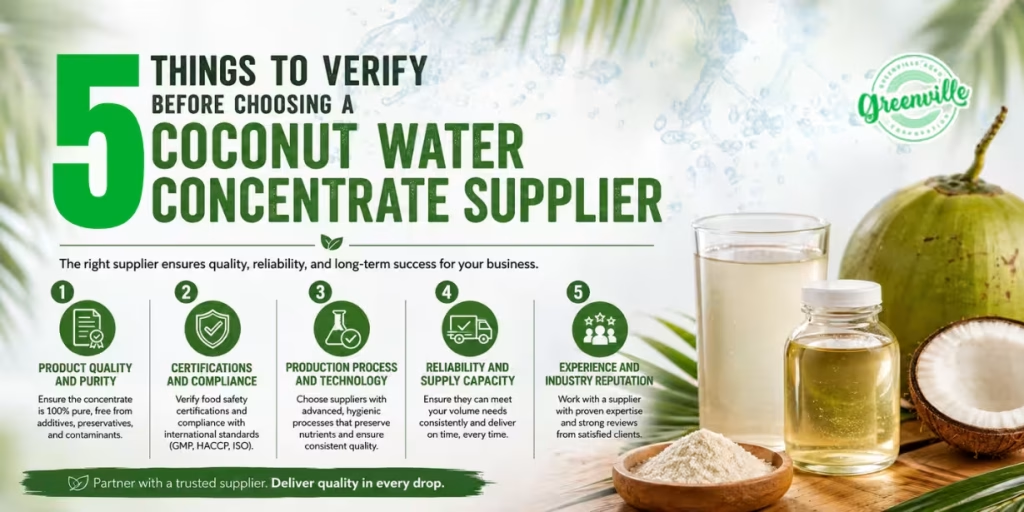
The first time a manufacturer goes looking for a coconut water concentrate source, the number of available suppliers can be overwhelming, and the differences between them aren’t always obvious from a spec sheet or price quote. Two suppliers can look nearly interchangeable in a proposal, yet perform very differently once a product is flowing through a production line. The company you select shapes how uniform your output stays run after run, how smoothly your production calendar holds together, and how exposed your supply chain is if something goes wrong upstream. Getting this decision right early spares a buyer from problems that are far more expensive to fix once a contract is already signed.
Below is a rundown of what tends to separate a supplier worth building a long-term relationship with from one that only looks good in an initial pitch, along with the questions that are worth putting to any candidate before signing on.
Why the Supplier You Pick Matters So Much
Most coconut water concentrate on the market lands somewhere between 60 and 65 Brix, but reaching that number is only part of the story; how a producer gets there, and how repeatedly they hit it, is what determines performance downstream. Work with a manufacturer whose process wanders from batch to batch and you inherit that inconsistency, whether it surfaces as a shifting flavor profile, dilution ratios that need constant adjustment, or mineral content that varies more than your formulation can tolerate. There’s also a logistics side to this: loose documentation, unreliable shipping windows, or packaging that isn’t built for the journey can quietly turn into delays and unplanned expenses long before any quality issue shows up in the product itself.
What to Look For When Comparing Suppliers
Consistency in Concentration Level
It’s worth asking directly how a supplier tracks and records Brix readings across their production runs. One that can consistently hit that 60-to-65 range, order after order, hands you a reconstitution formula you can rely on instead of one you have to re-calibrate every time a new shipment arrives.
Facility Standards and Documentation
Credentials like HACCP, ISO 22000, or FDA registration exist so buyers don’t have to take a facility’s word for it on food safety and quality control. Ask for the paperwork before you place an order rather than after, and double check that any certificate you’re handed hasn’t lapsed.
How the Product Is Packaged for Transit
The reason coconut water concentrate can sit unrefrigerated for long stretches usually comes down to aseptic packaging suited for international freight. Find out exactly how a given supplier packages for export, what shelf life that format is rated for, and whether they’ll actually share stability testing rather than just telling you it holds up fine.
Order Volumes and Turnaround
Minimum order sizes and production timelines differ a lot from one coconut concentrate producer to the next. Nailing these details down early lets you build them into your own production calendar instead of discovering a gap in supply after the fact, which matters even more when the source is overseas.
Whether They Can Show Their Work
A producer who can point to the specific region a batch came from, and when it was processed, is giving you something most competitors won’t: a paper trail to pull on if a quality question ever comes up. That kind of openness tends to say a lot about how the rest of the relationship will go.
A Short List of Questions Worth Asking Directly
Before locking in a sourcing decision, put a handful of pointed questions to any candidate supplier: what Brix level do they commit to, and how do they verify it? Which certifications does the facility currently carry? What export packaging options exist, and what shelf life comes with each? Will they send samples with a certificate of analysis before you commit to a full order? A supplier who answers these plainly is usually a safer bet than one leaning on a polished pitch deck.
What Sets Greenville Apart
Greenville holds its coconut water concentrate to a steady Brix range, ships it in aseptic packaging built for international transit, and carries the certifications manufacturing buyers expect from a commercial-scale supplier. For a buyer weighing options, that mix of predictability, paperwork, and packaging that survives the trip is what turns a single purchase order into a supply relationship worth keeping.
At the end of the day, picking the right coconut water concentrate supplier comes down to three things: consistency, certification, and a willingness to show you how they operate. A supplier who checks all three takes a lot of guesswork out of your supply chain.
Greenville supplies both coconut water and coconut water concentrate to commercial buyers across several industries. If you’d like to learn more about our product specifications, or talk through sourcing for your operation, contact us and our team will be glad to help.