
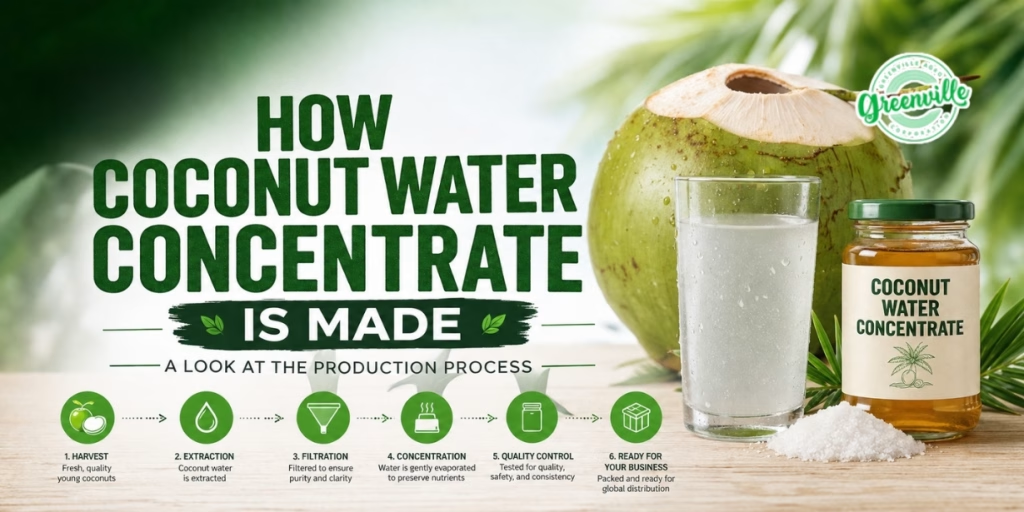
Buyers often evaluate coconut water concentrate by the numbers on a spec sheet: Brix level, packaging format, shelf life. Few stop to consider what happens before the product ever reaches that stage. Understanding how coconut water concentrate is made helps explain why quality and consistency vary between suppliers, and what to look for when sourcing this ingredient for manufacturing. It also makes clear why concentrate, rather than fresh coconut water, has become the standard ingredient form for large-scale production. This post walks through the production process step by step, from harvest to final packaging.
Selecting and Harvesting the Coconuts
Production starts with selecting coconuts at the right stage of maturity. Coconuts harvested too early or too late yield a liquid with less desirable volume, sweetness, or mineral balance, so producers rely on timing and visual cues to identify the optimal window for young green coconuts. Harvest timing also affects how quickly the liquid begins to change once opened, which is why processing typically happens close to where the coconuts are grown, keeping the interval between harvest and extraction as short as possible.
Extracting the Fresh Coconut Water
Once harvested, the coconuts are opened and the liquid inside is extracted, then filtered to remove any coconut fiber or particulate. The raw liquid undergoes an initial quality check for clarity, sweetness, and freshness before moving further into processing. Because fresh coconut water begins to oxidize soon after exposure to air, this stage happens quickly, with the liquid moving toward evaporation within a short window to preserve its natural composition.
The Evaporation Process
- Controlled Evaporation and Brix Level
The filtered coconut water then enters a controlled evaporation process, where it passes through equipment that gradually removes water content under regulated temperature and, often, reduced pressure. This step concentrates the natural sugars and minerals already present in the liquid, raising the Brix level, a measure of sugar concentration, from roughly 5 up to a target range of 60 to 65. Hitting that concentration threshold is what separates a genuine coconut water concentrate from a product that’s simply had some water cooked off.
- Preserving Flavor and Nutrients
Because heat and time can both affect flavor, producers manage evaporation carefully to avoid caramelizing sugars or degrading volatile flavor compounds. Low-temperature, vacuum-assisted evaporation is commonly used for this reason, allowing water to be removed while keeping the liquid’s characteristic taste and mineral profile close to that of the fresh product.
Pasteurization and Aseptic Packaging
Once the target Brix level is reached, the concentrate is pasteurized to address microbial risk without relying on chemical preservatives. It is then filled into aseptic packaging, such as bag-in-drum, bag-in-box, or aseptic totes, under sterile conditions that keep the product stable at ambient temperature for extended periods. This packaging step is part of what allows coconut water concentrate to be shipped internationally and stored for months, unlike fresh coconut water.
Quality Control at Every Stage
Testing does not happen only once the concentrate is finished. Reputable producers check Brix level, flavor, and microbial safety at multiple points, from initial extraction through post-evaporation and again before packaging. This layered approach catches inconsistencies early rather than relying on a single check at the end of the line, and it is a key reason why concentrate quality can vary significantly between suppliers. For buyers, asking a supplier how and when testing takes place is often more revealing than the finished specification sheet alone.
Why the Process Matters for Buyers
Every stage of production, from coconut selection to packaging format, has a direct effect on the ingredient a buyer eventually receives. A concentrate produced with consistent sourcing, controlled evaporation, and rigorous testing behaves predictably in formulation, batch after batch. Buyers who understand this process are better equipped to ask suppliers the right questions and evaluate whether a given concentrate will meet the demands of their production line, whether that line is a ready-to-drink beverage, a sports nutrition product, or a food or personal care formulation.
From harvest to aseptic packaging, each step in producing coconut water concentrate is designed to preserve the character of the original liquid while making it stable, shippable, and ready for large-scale use. At Greenville, quality control is built into every stage of that process, from the coconuts we select to the packaging that leaves our facility. If you have questions about our coconut water concentrate or would like to discuss sourcing for your production needs, reach out to our team today.