
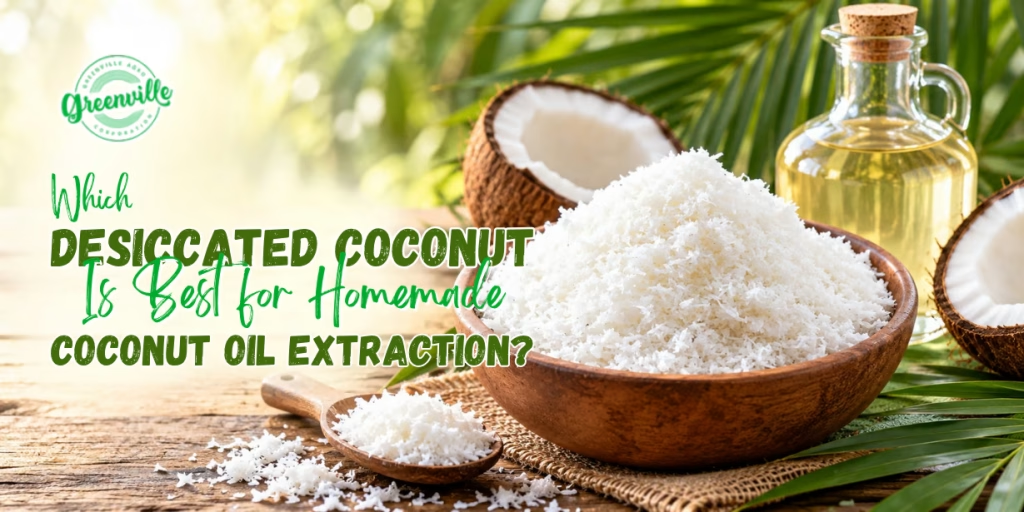
Extracting coconut oil at home has become a popular kitchen project for people who want a more direct connection to their ingredients, and desiccated coconut has become a common shortcut for it. Fresh coconuts are not always available, take time to crack and grate, and vary widely in quality. A bag of desiccated coconut, if you pick the right kind, solves most of those problems while still yielding a usable homemade oil.
Not every desiccated coconut on the shelf is suited to this job, though. Greenville Agro Corporation, an organic coconut manufacturer in the Philippines, produces desiccated coconut alongside virgin, crude, and RBD coconut oil, which makes it a useful reference for understanding what separates a good extraction candidate from a poor one.
Why Desiccated Coconut Works for Homemade Extraction
Desiccated coconut is already dried and finely processed coconut meat, which means the oil-bearing fat is concentrated and ready to be released without the extra steps of cracking, husking, and grating a whole coconut. Rehydrating it briefly, then blending and straining, gives home cooks a simplified version of the process manufacturers use to produce crude and virgin coconut oil at scale.
What to Look for When Choosing Desiccated Coconut for Oil Extraction
Fat content matters most. Full-fat, unsweetened desiccated coconut yields noticeably more oil than reduced-fat or sweetened versions, since added sugar dilutes the fat percentage and sweetened varieties are processed differently. Reduced-fat desiccated coconut, sometimes sold for lower-calorie baking, has already had a portion of its natural oil removed and is a poor choice for this purpose.
Freshness also affects yield and flavor. Coconut fat oxidizes over time, so a bag that has been sitting on a shelf for months will produce less oil and a flatter flavor than a recently processed batch. Organic, unsweetened, and minimally processed desiccated coconut, without added preservatives or bleaching agents, tends to give the cleanest result.
Fine vs. Coarse: Does Cut Size Make a Difference?
Finely grated desiccated coconut has more exposed surface area, which helps it rehydrate faster and release fat more readily during blending. Coarser, shredded, or flaked cuts work too, but typically need a longer soak and more thorough blending to achieve a similar yield. For a home extraction project, fine or medium desiccated coconut is generally the more efficient starting point.
A Simple Overview of the Home Extraction Process
Most home methods follow the same basic pattern: soak the desiccated coconut in warm water to rehydrate it, blend it into a thick slurry, then strain the mixture through cheesecloth to separate the coconut milk from the pulp. That coconut milk is then left to sit, allowing the cream to rise and separate from the water, before being gently heated or fermented to release the oil, which is skimmed off once it separates. This mirrors, on a small scale, the same fat-separation principle used in commercial coconut oil production.
Realistic Expectations for Yield and Use
Home extraction typically produces a smaller, less refined yield than commercially processed coconut oil, and the flavor and clarity can vary batch to batch depending on technique. It is best suited for small-batch cooking, skin and hair care, or simply understanding the process, rather than replacing a reliable commercial-grade oil for daily use or larger recipes.
Choosing the Right Desiccated Coconut Before You Start
Before buying desiccated coconut for oil extraction, confirm:
- Full-fat, unsweetened variety rather than reduced-fat or sweetened
- Organic certification or a minimally processed label, free from preservatives
- A recent production date, since fresher coconut yields more oil
- Fine or medium cut for faster rehydration and easier blending
Getting the Best Results at Home
Homemade coconut oil extraction is a rewarding project, but the quality of the desiccated coconut you start with determines how much oil you get and how it tastes. Full-fat, unsweetened, organic desiccated coconut gives home cooks the best foundation for a clean, flavorful result.
Greenville Agro Corporation supplies organic, unsweetened desiccated coconut alongside virgin, crude, and RBD coconut oil, giving home cooks and small food businesses a dependable source for both the raw ingredient and the finished product. Contact us to learn more about our desiccated coconut range or explore our blog for more coconut ingredient insights.